It is a cold January morning, the thermostat reads 58 degrees, and the furnace that ran fine last night now blows nothing but cool air. This is one of the most common situations we respond to. A furnace that stops heating in the middle of winter creates real discomfort quickly, and it demands a fast, correct diagnosis. That is the work we have done for decades, and it is the reason Riley Heating & Cooling has stayed busy through generations of changing technology.
Why Furnaces Fail in the First Place
Most heating problems trace back to a short list of causes. Furnaces are mechanical systems with electrical controls, moving parts, and combustion components, and each of those areas has predictable failure points. Understanding these helps you know when a repair is minor and when it points to something larger.
When we arrive at a home with no heat, we work through the system methodically rather than guessing. The most frequent causes we find include:
- Failed ignition components: Hot surface igniters and flame sensors wear out over time and are a leading reason a furnace lights briefly then shuts down.
- Clogged air filters: A dirty filter restricts airflow, which can cause the heat exchanger to overheat and trip the limit switch.
- Thermostat and control faults: Wiring problems, dead batteries, or a failing control board can prevent the furnace from receiving a call for heat.
- Blower motor issues: A worn capacitor or motor bearing keeps warm air from moving through the ductwork.
How We Diagnose and Repair Heating Equipment
Our repair process starts with listening. What sounds did the furnace make before it quit? Did it cycle on and off? Did a breaker trip? These details narrow the search before we open a single panel. From there, we test the electrical supply, inspect the ignition sequence, measure gas pressure, and check the heat exchanger for cracks or corrosion that could allow carbon monoxide into the living space.
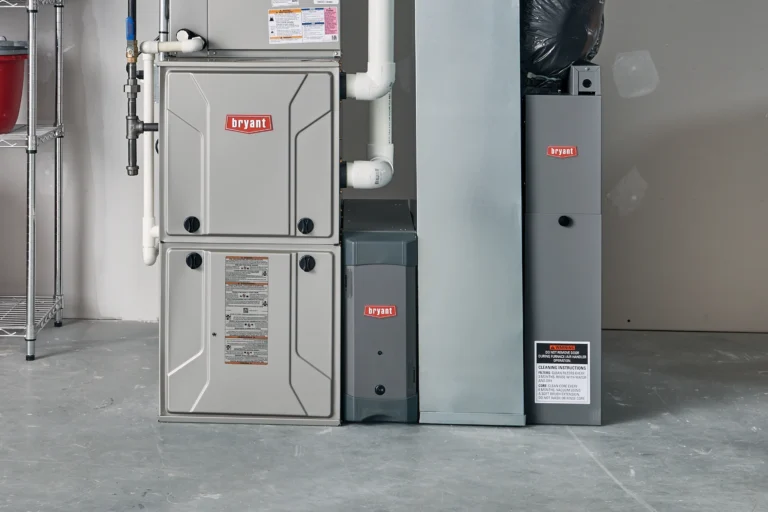
We service and repair all brands and types of equipment, from high-efficiency condensing furnaces to older standing-pilot units still found in some homes. As a Bryant Factory Authorized Service provider since 2003, we have met the rigorous standards required to carry and install their top-of-the-line heating products, but our technicians are trained to work confidently on whatever equipment you already own. That matters because you should not have to replace a system just to get it repaired by a qualified team.
Repair or Replace: Making the Right Call
One of the most common questions we hear is whether a furnace is worth fixing or whether it makes more sense to replace it. There is no single answer, but there are clear factors that guide an honest recommendation. We look at the age of the unit, the cost of the failed component, the efficiency rating, and how the furnace has performed over past winters.
As a general guide, we consider these points when advising a homeowner:
- Age of the system: Furnaces older than 15 to 20 years often face declining efficiency and increasingly hard-to-find parts.
- Cost of the repair: When a single repair approaches a large share of replacement cost, replacement usually delivers better long-term value.
- Safety concerns: A cracked heat exchanger is a safety issue we never take lightly, and it typically points toward replacement.
We give you the facts and let you decide. We would rather repair a furnace that has years of life left than push an unnecessary replacement, because that is exactly how we would want to be treated.
A Legacy of Trust in the West Suburbs
Riley Heating & Cooling was founded in 1934. As the oldest, local, family-owned heating and air conditioning company, we have proudly served our customers exactly how we would want to be served. We have been family-owned and -operated since the beginning, and we have held onto our commitment to trust, value, and service through every decade of that history. When you call us for furnace repair, you are working with a company that has weathered nearly a century of Chicago winters.
We proudly service neighborhoods near the West Suburbs of Chicago, including River Forest, Forest Park, Oak Park, Elwood Park, Elmhurst, Melrose Park & Westchester. Every residential repair we complete is backed by our two-year satisfaction guarantee, because we stand behind the work long after the furnace is running warm again. When the heat goes out and the temperature drops, you want a team that answers, diagnoses correctly, and fixes the problem right the first time. That is the standard we have kept since 1934.